Search This Blog

Monday, April 29, 2013

When I first arrived in Toronto from my home in Vancouver in 1963 I felt somehow that it was the beginning of my life as an adult. I was 25, full of energy and hope and excitement. Everything was ahead; everything was possible. I was the generation of the future and it was the 60's. Life in this suddenly exciting city: its blossoming culture of the arts, theater, films; the transformation in 'rules' of relationships and just the whole new sense of what you could do, how you could dress, what you could think was being transformed. And I was part of it! It was exciting and it felt like the beginning of the journey of my life. All that had gone before seemed to be just preparation for this moment. 

When I arrived back in Toronto in 2008 after, among other things, 30 years in a monastery, living a life of silence and profound listening and contemplation it was a bit like dropping into the old/new life as if from Mars. All was both different and the same. One of those things that particularly struck me was to see around me the new 20's generation, the people I was part of just a blink ago. They seem to be doing, and perhaps feeling, pretty much as we did: life is ahead, all is possible, we will be different, we are invulnerable. Has every generation experienced this?

The point of all this as I see it from my new vantage point now is that I have become so much more aware of Time. Whatever Time is. Because what I know and experience is that I am old now and will soon die; my nieces and nephews who were the 'young beginners' when I left are now middle-aged, and even they face a new generation of youth. Time is doing its thing. And the only way I can describe this experience of Time is by using the word inexorable.  
So I find myself wondering yet again: how often do I, do we, actually examine our journey? How often do we stop long enough to ponder what we are doing, what kind of people we are becoming, how much we are present to the moment of now.  Do we actually ever take hold of the journey which is our life or do we just let things roll on and happen to us? It seems to me that the answers make a huge difference to how we will feel about our lives at the end - and there is, indeed, an end.

I found another quote from *Henri Nouwen on the same theme: In our world we are constantly pulled away from our innermost self and encouraged to work for answers instead of listening to the questions...but in solitude we can pay attention to our inner self. This has nothing to do with ego centrism or unhealthy introspection because as Rilke says, ' what is going on in our innermost being is worthy of our whole love'.

* Nouwen, Henri: National Catholic Reporter July 1974

Monday, April 22, 2013

A Quiet Place

Lately I have been reading some articles that Henri Nouwen wrote for the National Catholic Reporter in 1974. These are all stored at the Henri Nouwen Archives at the University of St Michael's College at the University of Toronto. In the articles I am currently reviewing Henri is talking about our human need to find solitude and to have periods of silence in our lives.

Obviously, with my own background as a former contemplative Carmelite nun, silence has and still is, a huge need in my life. So I certainly resonate with what Henri is saying even though the odd part is that he pretty much avoided it in his own life. But I believe that what he says is true even if he himself had real difficulty with living it.

In his book *'Out of Solitude' where some of these articles were published, Henri says, in talking about Jesus' need to go off and be silent and pray, 

In the lonely place Jesus finds the courage to follow God's will and not his own; to speak God's words and not his own; to do God's work and not his own. 

Nouwen then goes on to say something to us all, 

Somewhere we know that without a lonely place our lives are in danger. Somewhere we know that without silence words lose their meaning, that without listening speaking no longer heals, that without distance closeness cannot cure. Somewhere we know that without a lonely place our actions quickly become empty gestures.

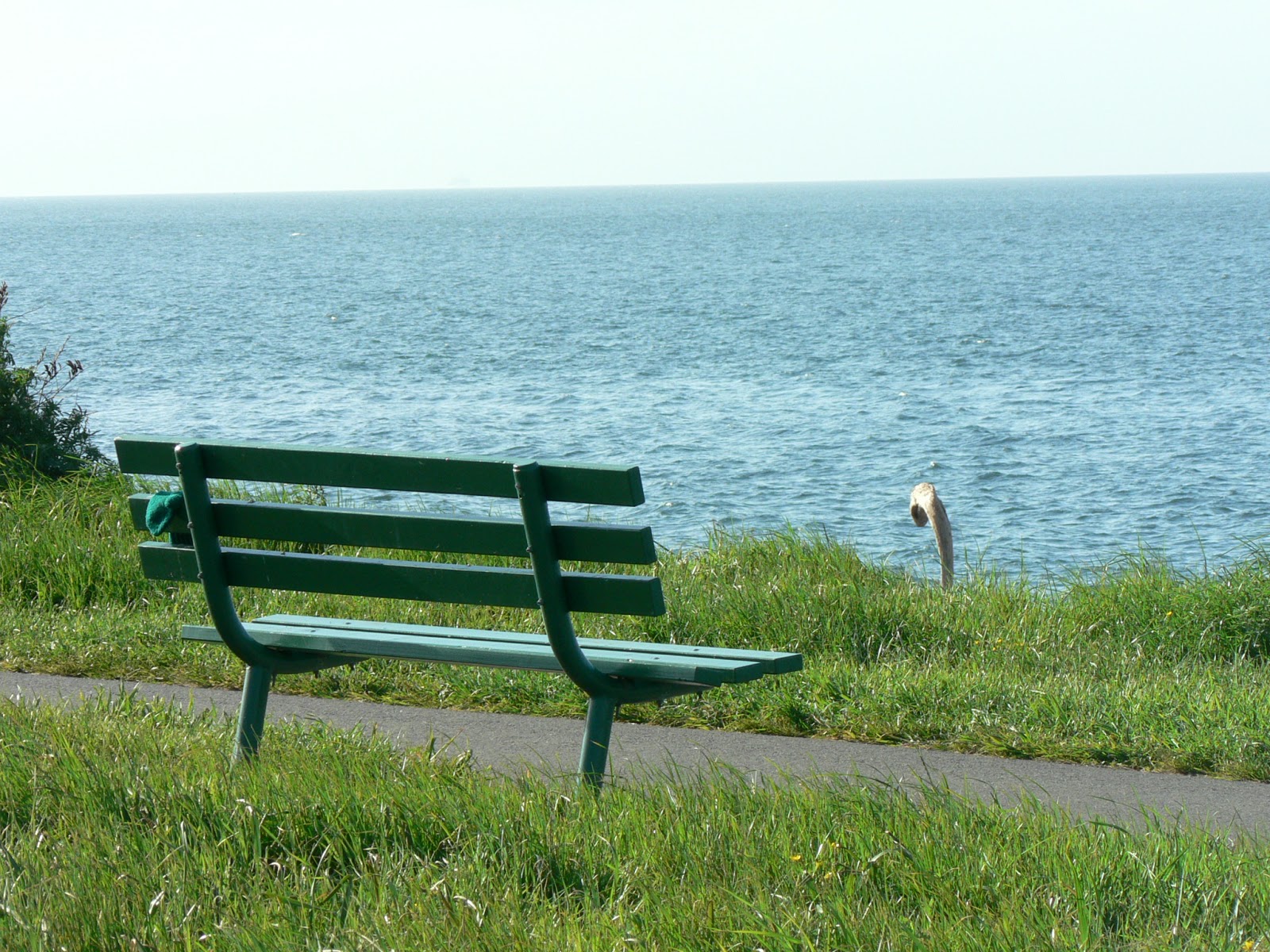
I do know that being silent for any length of time can be really difficult for many modern men and women but if we do not take time to reflect on our day, on our relationships, on the direction we are taking in life, our life will be so much less fulfilling, loving and compassionate than it is meant to be. Maybe there is a beautiful, peaceful place near you that you can find if there is not a place of quiet for you at home.
*Out of Solitude, Three meditations on the Christian Life. Ave Maria Press, Notre Dame, Indiana, 1974

Sunday, April 14, 2013

Date books and meaning (revisited)

I am once again reading Mary Jo Leddy's very fine book: *Radical Gratitude, and finding so much to ponder, even to startle. Here's one of her thoughts that I found really struck a chord. This quote is from a chapter entitled, The Point of our Being:

Consider date books, their shape and size and color, how they are used and why. Not only are they helpful, they are also a sign of identity and maybe even purpose in life. You can tell a person, so they say, by his or her date book. The fuller it is the more important you must be, the more meaningful your life - or so it would seem. You sense your true insignificance when someone merely pencils you in - and tilts the date book toward you so you can see how lucky your are to have been fitted in between all those other to do's. An empty day in a date book can seem like a day devoid of meaning and purpose. No crisis seems worse than losing your date book, because then you wouldn't know what you were supposed to do or when.

Yet, would you still know why?

I may have used this quote before but I find it so powerful. Do we define the value of our lives by how many things we have to do? By how many people we may see in a day? By the sheer number of items we have to remember? And then those questions are followed by the big question: why?


Why are we rushing around filling up our time with all those 'to do's'? Do we have a sense of what the purpose of it all is? Do we have a sense of purpose at all or are we just filling in the time? Why is it so hard for us to enjoy doing nothing - literally doing nothing? Being silent? being alone? 
Midnight wait at the Pizza Pizza
The Buddhist and Christian sense of being in the present moment is so worth giving some thought to. The present moment is in fact, all we have. What if we come to the end of our lives and find ourselves wondering - did I really LIVE this gift of my life. Was I actually THERE for those whom I love? Was I there for the events of history that are happening everywhere around me?

I have recently realized in my own life how much I miss and I am trying to commit to paying better attention. What a hard task though and yet I sense it is the way to real life.

*Mary Jo Leddy: Radical Gratitude, Orbis Books, Maryknoll, N.Y. 2002


Monday, April 8, 2013

Random Thoughts


The first is a quote from Horace Walpole - I don't know the source alas - in which he says:

 'Imagination was given to us to compensate us for what we are not. A sense of humour was provided to console us for what we are'.

I do think that is worth pondering. I want to remember that when I am taking life too seriously. I first found this quote in a book by *Joan Chittister. She suggests that there 'are some things that must always be laughed at in life:

1) Laugh when people tell a joke. Otherwise you might make them feel bad.
2) Laugh when you look into a mirror.
3) Laugh when you make a mistake. If you don't you're liable to forget how 
    ultimately unimportant the whole thing really is, whatever it is.
4) Laugh with small children.
5) Laugh at situations that are out of your control.
6) Laugh at anything pompous.
7) Finally, laugh when all your carefully laid plans get changed...you're free now
    to do something else.


Second random thought:

If we human animals (and we are members of the animal world) become love (which I think is the intention that Jesus was wanting for us) then all of creation thrives. Perhaps it is because we have evolved in a particular direction and are more able to manipulate and control our animal qualities (to eat, to reproduce, to defend territory and lots more) and therefore our environment, that God 'decided' that we needed a lot of help. We are not to use these gifts to destroy everything though we often seem to be working hard at doing just that. So we have been given love as our possibility and our guide. But we are free to choose it or not. Other members of the animal world don't have that freedom but they also don't destroy the world. It is a wondrous responsibility we have.


*Joan Chittister: For Everything a Season, Orbis Books, Maryknoll, N.Y.,1995/2013.

Saturday, March 30, 2013

Easter

I think there is a very real way in which these people are images of Christ crucified. And if that is true then there is hope for them for they will , as Jesus  said to the man on the cross next to him, ' be with him in paradise'. 
                                                           
Maybe that seems facile. Because we know that sometimes life does not get better and then we wonder if there could be a paradise? 

There are two things I think are worth thinking about here:
                                                         First of all, experience does teach us that paradise exists where love exists. We also know by experience, that we are given the power to love. So... by loving those who are suffering we can make paradise present for them and for us. When we can feed the hungry, visit the sick, free those imprisoned by fear, clothe the poor, educate children and nurse the sick then, I think, paradise is present. Then these people we see here would no longer have to live like this.             

Secondly, by using this power of love starting with those right next to us and spreading out to neighbors and nations so that justice prevails, we won't even need to ask whether paradise exists for we will be 
there in the midst of it.


                        HAPPY 
                       EASTER!


Friday, March 29, 2013

Holy Saturday


 This is from Kahlil Gibran's Jesus the son of man:

When Jesus spoke the whole world was hushed to listen. His words were not for our ears but rather for the elements of which God made this earth.
He spoke to the sea, our vast mother, that gave us birth. He spoke to the mountain, our elder brother whose summit is a promise.

And He spoke to the angels beyond the sea and the mountain to whom we entrusted our dreams ere the clay in us was made hard in the sun.

And still His speech slumbers within our breast like a love-song half forgotten, and sometimes it burns itself through to our memory.

His speech was simple and joyous, and the sound of His voice was like cool water in a land of drought.

Once He raised His hand against the sky, and His fingers were like the branches of a sycamore tree; and He said with a great voice:

“The prophets of old have spoken to you, and your ears are filled with their speech. But I say unto you, empty your ears of what you have heard.”

And these words of Jesus, “But I say unto you,” were not uttered by a man of our race nor of our world; but rather by a host of seraphim marching across the sky of Judea.

Again and yet again He would quote the law and the prophets, and then he would say, “But I say unto you.”

Oh, what burning words, what waves of seas unknown to the shores of our mind, “But I say unto you.”

What stars seeking the darkness of the soul, and what sleepless souls awaiting the dawn.


To tell of the speech of Jesus one must needs have His speech or the echo thereof.

I have neither the speech nor the echo.

I beg you to forgive me for beginning a story that I cannot end. But the end is not yet upon my lips. It is still a love song in the wind. 


Good Friday

Now it is Good Friday, the day that began a journey that goes on even today. It is a journey about love and its response to unjust suffering; it is about the ways in which we lash out at those we don't agree with or who in some way threaten us. But it is also about the possibility of healing and the existence of life-giving hope. 

I marvel in the example of the Nelson Mandela's of our world who, in spite of all the evil actions that are inflicted upon them, manage somehow, through faith and courage to rise, not unscathed but yet stronger, more loving, more compassionate. There are too, the unending stream of women in our world who are brutalized, raped , denied humanity and yet rise above all that to be people of life, people who will not be crushed by all that we at our worst can do to one another. I know too, many men and women who born with scars of handicap, who are written off as not being worthy and full human beings, are yet in spite of ridicule, deprivation of rights, or persecution ,they become people alive with dignity and joy.

We do not ever, ever, ever wish suffering. We do not ever, I hope, think it right to inflict suffering. But the sadness is, it exists and I think we can, like Jesus, like the Mandela's of our world, like the brutalized and disenfranchised women of our world, like the mentally and physically disabled of our world, take what is bad and with God's Spirit in our hearts, make it something new, something compassionate, something whole. And then, our world is a better place in which to live.


I think that is what Jesus' crucifixion led to. If God is like Jesus, then we found out that God is not distant and uninvolved. God is  here with us hanging on that cross of terror, giving us the wherewith, not just to endure, but in the end,  to overcome all that is hurtful and dark in a world meant to be loving and care-full and joyful.