Search This Blog

Wednesday, February 29, 2012

Rushing or... not

I think I may have said that I am reading a couple of new books which seem to be related though that wasn't necessarily my intention. The first book is called 'In Praise of Slowness' by Carl Honore and the second is called 'Quiet: The power of introverts in a world that can't stop talking' by Susan Cain.

The one that interests me as I write this is the Slowness book because the whole issue of why I and others rush through life has been vexing me for a while. I think I mentioned a while ago that until I entered the monastery I felt as if I was totally living my life at speed, on the surface. Skimming.

The other day I was at a meeting and met someone who brought this home to me. I was chatting with the woman sitting next to me. We discovered fairly quickly that we both lived in the Beach area of Toronto. Now the Beach is a wonderful place to live in this city. In five minutes I can be down at the Lake (Ontario) walking along the Boardwalk or through the park or just sitting watching the many faces of the lake. It is utterly beautiful in all weather and I come home refreshed, relaxed and hugely grateful. Just east of me there are also wonderful shops - little shops, pleasant shops. There are as well, an enormous number of restaurants, cafes where you can sit out in good weather and watch the world go by. 

So that is the area. There is a friendly, almost small town atmosphere.

As this woman and I were speaking I was raving on about the wonders of the Beach and how I love exploring it. She turned to me and said she had lived in the area for 30 years and never went to the lake and never investigated the stores. Later in the conversation she pulled out from her purse an enormous appointment book. Every page seemed to be crammed with things she was booked to do. I thought then of all that Carl Honore is trying to say about slowness and about how our lives improve immensely when we slow down, breathe deeply and live.  He makes very clear that this can't always be the case but that we can work towards it. He says we will be happier and healthier in the process.

What are we doing to ourselves?! What are we missing in the world around us? Who are we missing in the people around us? Why are we inclined to feel guilty when we aren't doing something? Where are we rushing to


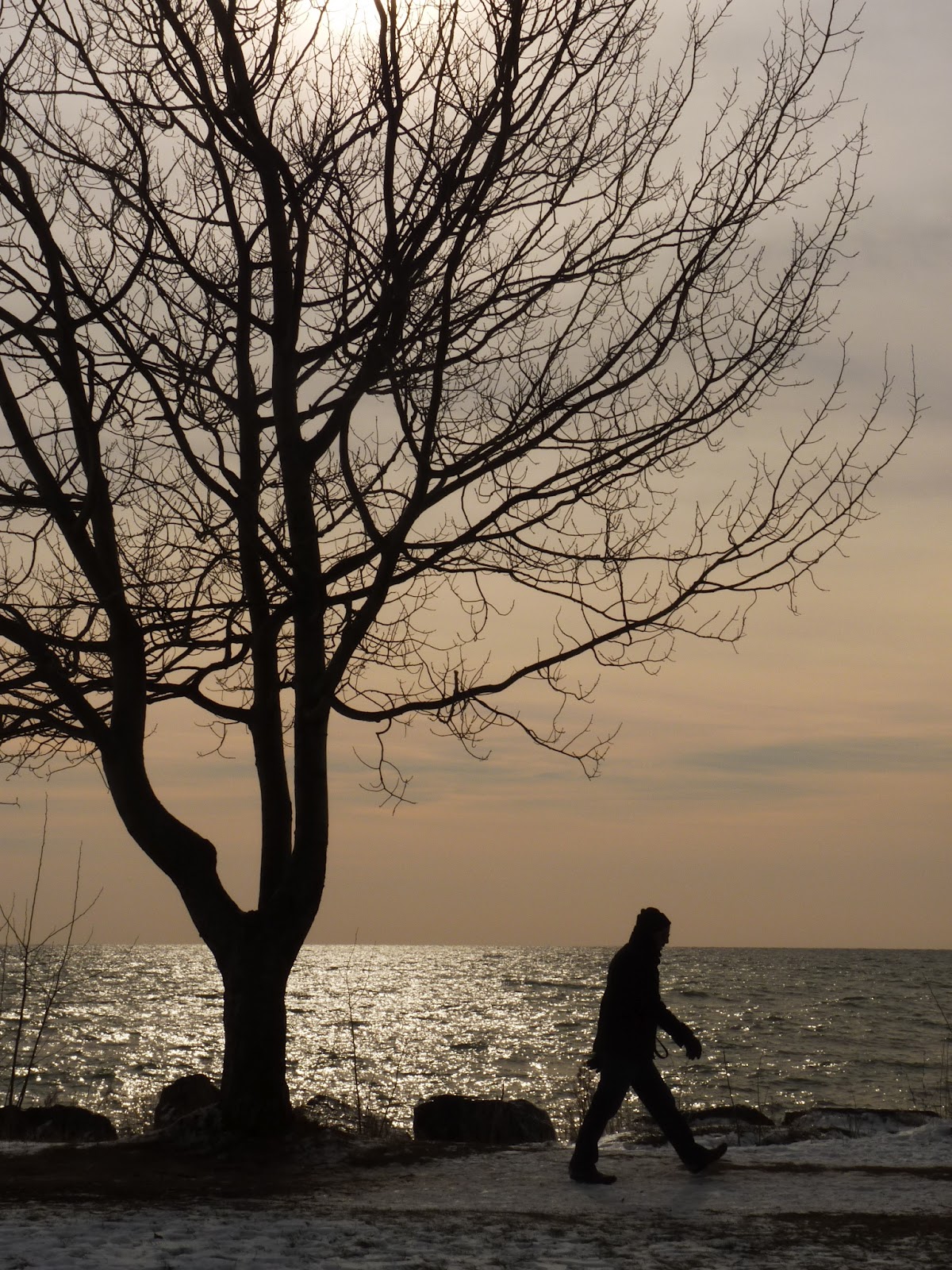
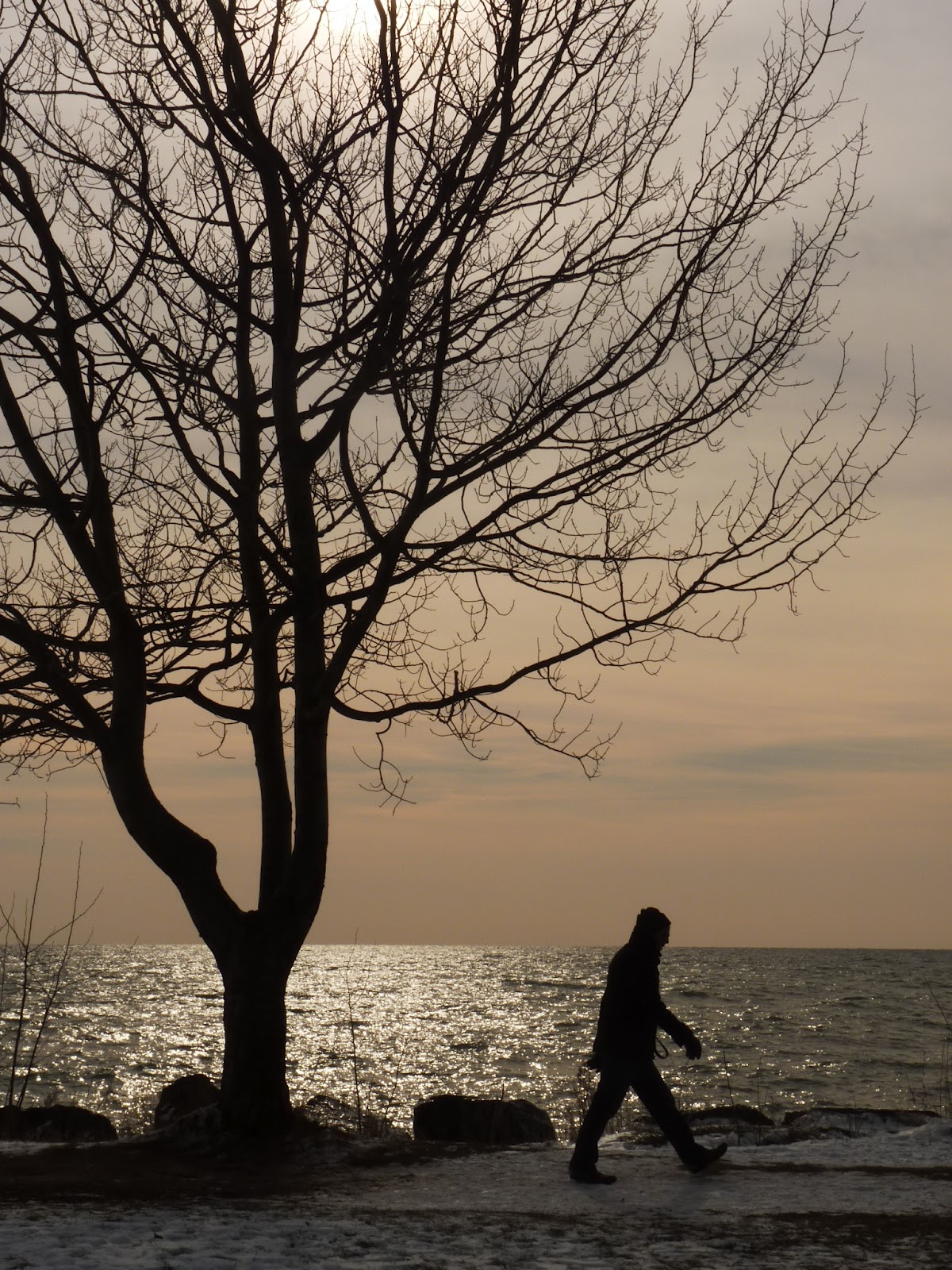
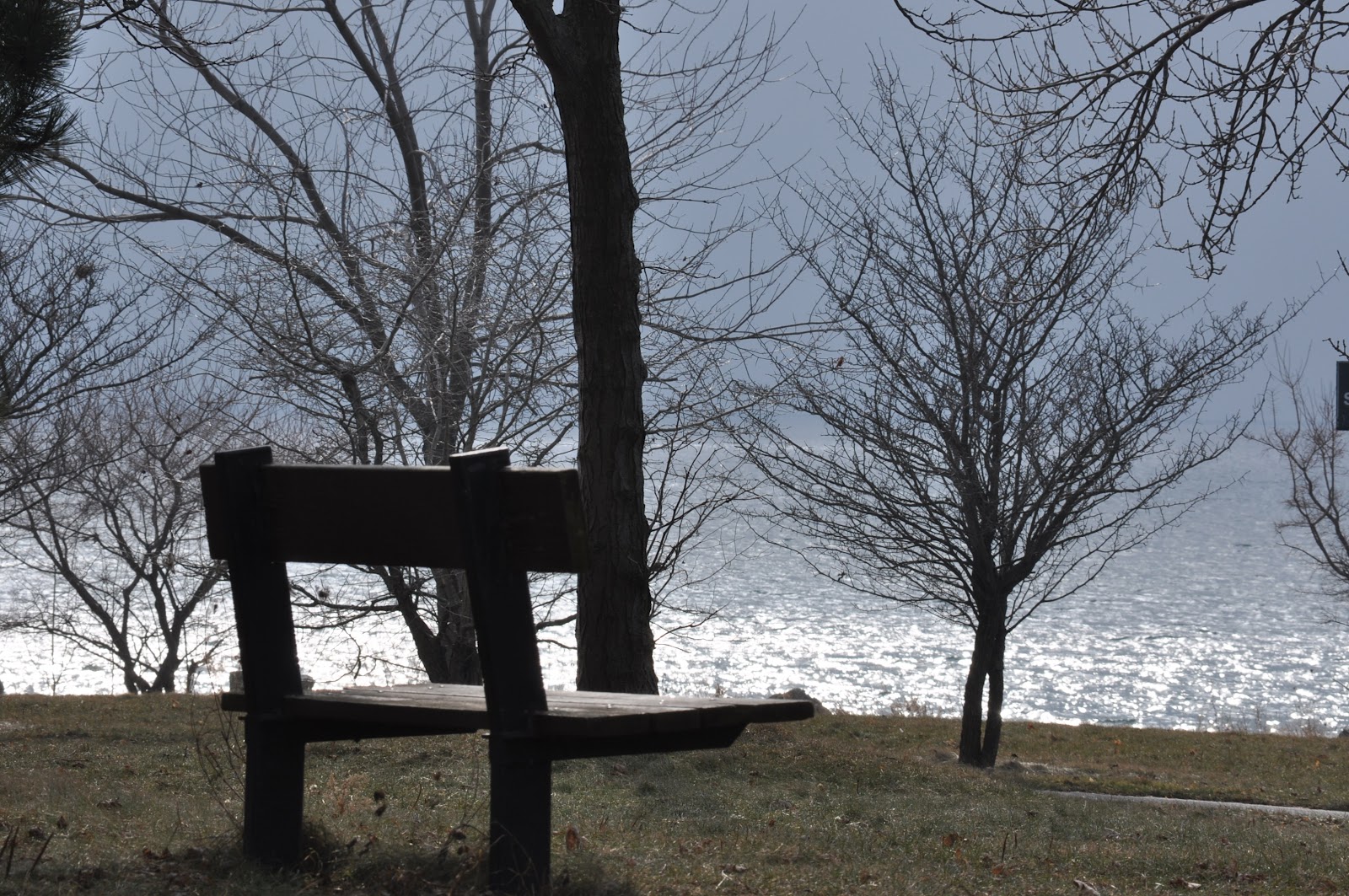
There we are! Just put yourself in the picture and rest.
Thursday, February 23, 2012

Compassion

I don't know if I have mentioned Karen Armstrong's Charter for Compassion before but if I have, then here I am again with it. 

The idea of the Charter is for all of us to commit ourselves to trying to live more compassionately. That compassion is a wonderful quality no one would deny (I hope) but I think what the Charter is trying to say is that it is missing in much of the political and even personal discourse of our day. 

You can see Armstrong speaking about it at TED's website or on You tube. I think the essence is twofold: 1) Compassion is not about pity as many of us think but about trying to put yourself in someone else's shoes. Doing this helps us to broaden our thinking beyond ourselves and leads to bridging gaps of hostility and fear that exist between us. 2) This is closely related of course and it is a version of the Golden Rule which all religions believe in. It says: Do not do to others what you would not want done to you. 

If we really think about and renew our efforts to try to live both of these they could surely be transforming for our world. They could bring back a sense of community and care that I hope we do not want to lose. It could begin to relieve the isolation that many feel these days. You can read more about the Charter at http://charterforcompassion.org/share/the-charter/.


 A second thought that has been floating around my head (does that imply lots of empty space there?) is about meaning. What do you feel gives your life meaning? What is your life all about? Can you share that ?


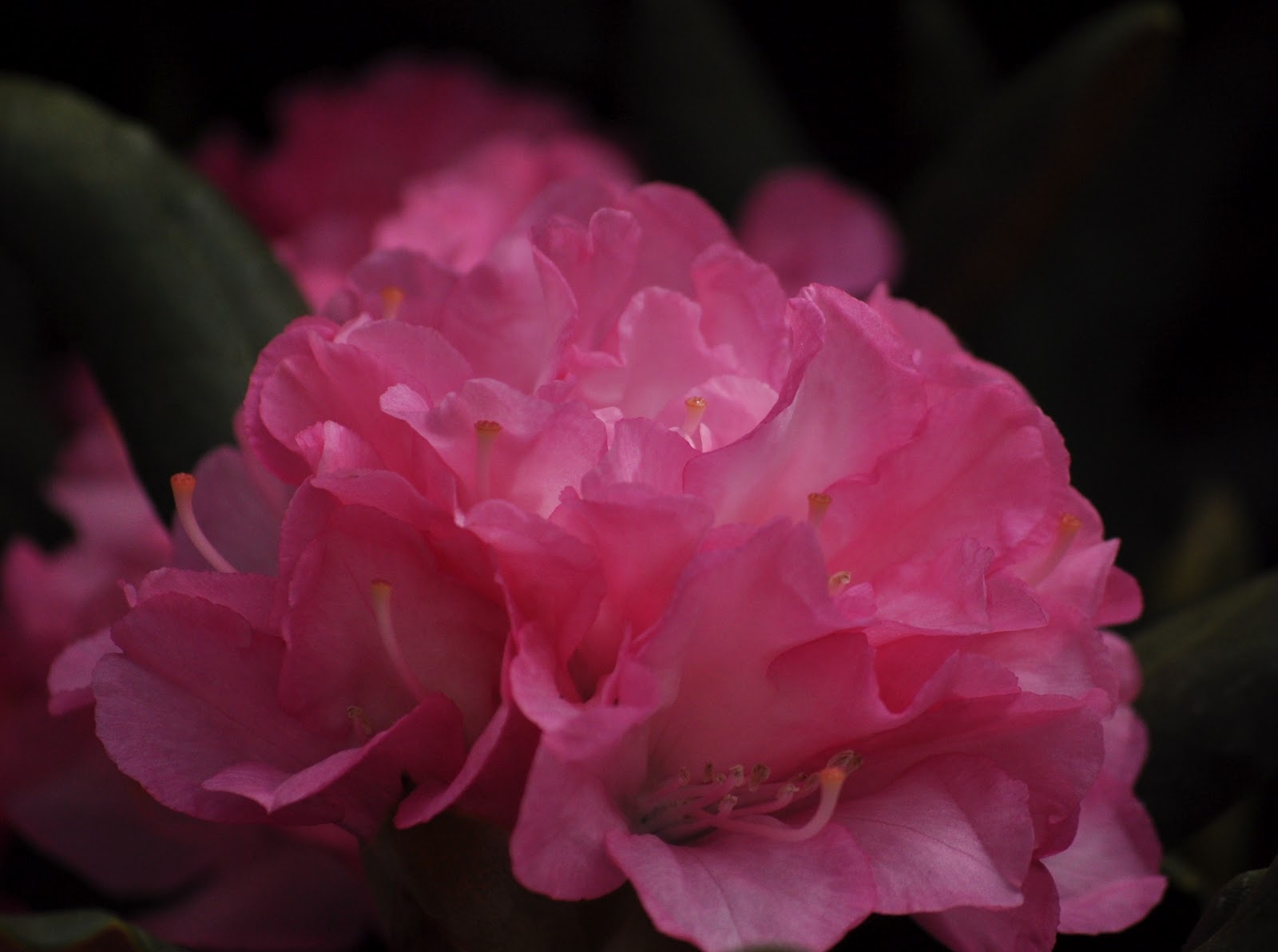
                                    And here is a photo to cheer up a February day.


Thursday, February 16, 2012

Living in depth and beauty

Because I am now reading Carl Honore's book In Praise of Slowness my mind is still on the subject of how deeply (or not) we live each moment. Early in his book he speaks about a cartoon he once saw. Two little girls are standing at the school bus stop, each clutching a personal planner.One says to the other, 'Okay, I'll move ballet back an hour, reschedule gymnastics, and cancel piano...you shift your violin lesson to Thursday and skip soccer practice ... that gives us from 3:15 to 3:45 on Wednesday the 16th to play'.

Does that sound too far fetched? Maybe it isn't anymore. Maybe even many of our children have their lives so highly planned that there is no time to just be - to just be children, to just discover and explore with imagination and freedom. And does it have to be that we adults live in the same pressured lifestyle? It is costly in many ways to change, but at least maybe it is worth starting in small ways, with little moments of time and see how much better we feel.

Which train of thought leads me to what seems to me at least, our increasingly odd sense of beauty. Just look at the billboards around town advertising all the beautiful products that are ours for the having (with help from our credit card and bank manager). Even people who are thought to be the beautiful people - the celebrities I was talking about before, might be thought to have a certain physical beauty but is there depth of beauty there? Goodness. Kindness. Compassion. Maybe there is but on the surface at least it seems often that what we are asked to consider beautiful is yes, the surface. 

Here are some people and things and situations that seem beautiful to me:
This flower just is. That is all it can be. And it gives infinite pleasure
This is Mary Jo - 92 years old. Isn't her face wonderful?
Just a small family watching a parade. But the mother's care is beautiful.

Some of my friends at l"Arche in Vancouver. Every single one is beauty in depth it seems to me.
I imagine in your life there is a great deal of beauty - it is surely worth cherishing and I would think we will see so much more if we live each moment as these authors I have mentioned the last few times, propose we do. 

Saturday, February 11, 2012

Plans and living now

'So, what are your plans then?' This question came from a friend some time ago after I had been back in Canada after my 30 years of monastic life in England. I found myself quite taken aback. What were my plans? Then, oddly - or so it seemed to me - I said, 'I don't have any'. 


'I don't have any plans'. There, I have said it. Almost immediately I can feel that little tug of guilt in my head. Shouldn't I have plans? Shouldn't I be setting out to DO something? Well, I am doing something - or trying to do something. I am  trying to live just now. Here. This moment. And seeing what happens.


I am soon going to be 75 years old ( I almost wrote 'odd' there instead of 'old' - hmmm.) and this life, this particular manifestation of me is sooner rather than later, going to end, so why not try to cherish each moment. So that is what I am trying to do and it is really quite amazing that in the process of that all sorts of lovely things happen. 


I sometimes think back to a younger me and recall the moment when I realized that I had lived almost the whole of my life until I entered the monastery, on the surface. I had not ever tasted anything really deeply. Isn't that a waste? Now, I know better what I want to do and what I think perhaps most people want to do but find themselves too busy to do. I want to live now - just now - because when you ponder it, that is absolutely all there is. That for me, is something to think about.


I am reminded of all this by two things I  have recently read. Once again the Buddhist writer/philosopher thich nhat hanh writing more about mindfulness: Mindful living is an art. You do not have to be a monk or live in a monastery to practice mindfulness. ... when you do the dishes [for instance] ..do not feel you have to rush. If you hurry , you waste the time of dish washing. The time you spend washing dishes and doing all your other everyday tasks is precious. It is time for being alive. When you practice mindful living, peace will bloom during your daily activities.
Well, who would have thought that such mundane things could be so precious but just try it!


The second quote is from a book by Mary Jo Leddy called Radical Gratitude. Consider date books, their shape and size and color, how they are used and why. Not only are they helpful, but they are also a sign of identity and maybe even purpose in life.  You can tell a person, or so they say, by his or her date book. The fuller it is the more important you must be, the more meaningful your life- or so it would seem. You sense your true insignificance when someone merely  pencils you in...no crisis seems worse than losing your date book, because then you wouldn't know what you were supposed to do or when. Yet, would you still know why? That is the question. Is there any thread of meaning, any sense of direction and purpose that flows through all those pages of a date book? Are the pages of our days held together by anything more than a cover?


Now that too, is worth pondering isn't it?


Wednesday, February 8, 2012

People who are gifts and the present fully lived


I haven't written for a little over a week. I feel as if I have abandoned my thinking process for what?.. daily life? busyness? laziness? Am not sure. But I have been pondering and I have been reading so maybe I can share some bits and pieces.

First of all, I was speaking about Geraldine and Iris in my last posting and wanted you to see them but alas I did not have accessible photos of them. But here are three other wonderful people from
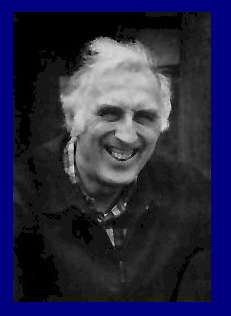
l'Arche  who have changed my life. There at the top is Arthur. Arthur and I are the same age and I am profoundly aware of how different our lives have been. But my life would not have been nearly so good had he not been a part of it. In the middle is Craig who was definitely a one-off human being. There was no one else quite like him and again, he was a gift to all whose lives he touched. And finally, there is Jean Vanier the founder of l'Arche without whom none of us would have met or been so enriched by the very special friendships that are part of that particular community living. I will try and find photos of the Geraldine and Iris and post them too.

Another photo, taken just the other day at the lake on the boardwalk. I was struck by the striding forth of the man. Was he just walking? Was he exercising? Was he noticing how beautiful it was? Was he present to what he was experiencing? Those questions fit in a bit with a couple of  books I am now reading. There were a couple of quotes that struck me as thought-provoking here. The first quote is from someone I have mentioned before, the Buddhist thich nhat hanh:  
The heart of Buddhist practice is to generate our own presence in such a way that we can touch deeply the life that is here and now and available in every moment. We have to be here for ourselves; we have to be here for the people we love; we have to be here for life with all its wonders.

The second quote is from Caryll Houselander, a spiritual writer from the 1940's: 

If we are afraid to know ourselves for what we are, it is because we have not the least idea of what that is. It is because we have not the least idea of the miracle of life-giving love that we are.

Tuesday, January 31, 2012

The Power of one

The other day I had a lovely visit with two friends from l'Arche. I always enjoy these visits because there is lots to share and lots of news to learn. We each have a special association with the l'Arche community in Greater Vancouver and so, getting together is a wonderful occasion for remembering the people we have lived with and loved.

L'Arche is there as a community which includes at its core, men and women who seem to be intellectually challenged in some way and who live with others who come to assist them but who, in the end, gain more than they give. When we have these reminisencing sessions it is always the core people we talk about because, I believe, it is they more than the others, who have touched our lives and helped transform them. When I think of this I am startled to think that these are people whom we as a society have written off (and that is not too strong a phrase).

I wanted to write about this because it occurs to me more and more that we, as human beings, often question ourselves and what we do or don't do by saying something like, 'what is the point of my doing this or that, I am only one person and nobody will care. What I do won't make any difference'. And yet, as I thought about the conversations I have had with my friends about our companions in l'Arche it occurred to me that this is never true.


One of the people we were talking about was our friend Geraldine. This woman was, yes, in some sense intellectually less agile than some but you could only admire her sense of herself: she knew what she wanted (or didn't - and this was always clear) and she had an amazing capacity to sit, to observe, to supervise and sometimes, to choose to do as little as possible. This is not a criticism because you recognized an art form when you saw it. Geraldine had managed to live quite a long life by choosing a way of getting the most with the least effort. That in some ways is a gift many people long for. She had a wonderful sense of humor, a beautifully unique laugh and she touched each life around her by her almost majestic presence there on the couch. She was one of the most interesting people I have ever known.


Someone else I always remember with love is Iris. Iris was very different from Geraldine. She was quite able in many ways and perhaps if her parents had not been told she was 'retarded' she would have married and lived a relatively normal life. In any case, she struggled lovingly, to be all that she could be. She was kind and considerate. But one of the things I remember most about her was something she taught me. Iris had come to spend some time with us in order to see if she would like to move to l'Arche, and so towards the end of her stay I said, 'Iris, have you made any decision about whether you would like to come and live here?'. She looked at me sadly and said, 'Well, I don't know. No one has ever taught me how to make a decision. I have never had to make one before.' Wow! That was an education for me. But it was also a glimpse into the heart of someone who was rich in humanity and who had suffered because no one had had faith in what she could learn to do.

My point in sharing this very tiny bit about these two wonderful women is that they profoundly affected me. Their presence and friendship enriched my life. Two (but of course there were many other unique, very special individuals as well but this is not a book) individual women whom society had judged to be 'handicapped' 'retarded' were two of the most interesting and human people I have ever known. Each one was a gift. Each one made a contribution to the world around them. They might have said ' what is the point of my living, what is the point of my trying, I am someone of no account'. But life proved differently. They touched not only my life, but many others as well. And all of us who were changed by knowing them have somehow passed that gift on to others. And so it spreads.

I guess what I am trying to say here is that hardly any of us are what the world calls 'big players'. But what we are, every one of us, is beautifully unique and precious individuals who touch the lives of many people in a lifetime and so, one does matter because it is like the ripples in the water- our little life touches another who touches another and on it goes. So wouldn't it be wonderful to see that as an incentive to be the best and most loving people we can be.


Wednesday, January 25, 2012

A root for community and compassion

We were at a bible study group this morning looking at the readings that will be used in some churches on Sunday. One of the readings is from Paul's first letter to the Corinthians and among other things it says, basically, ' you have a responsibility to and for one another'. He suggests for instance, that even when we may have a right to do something, we may have a responsibility not to do it if it will harm or scandalize others. At very least, I think he is suggesting that we think about the implications of what we say or do before we act, out of respect for our brothers and sisters.

This took my mind to something that I have noticed since I have come back to Canada from my life in the monastery. That is, it seems to me that our civic and political life is becoming so confrontational that there is less and less will to compromise or listen or love. So for instance, I am certain I am right, you do not agree with me, therefore you are wrong and I will destroy you. Or, at very least,  I will shout you down when you try to speak, I will cast all sorts of doubts on your truthfulness, I will be certain that you don't 'win'. Because if you win then I must lose. That is certainly evident in American politics just now but it may be increasingly true here too. 

But it is not just in political life that this happens. I hear  more and more often  people speaking about entitlement for instance. 'I am entitled to...' and follows a whole list of perks. With that goes the sense that if I don't fight for myself and my rights, no one else will and if I fight for mine I can't fight for yours. In feeling that way, may we not be losing sight of that humanity that Paul speaks of?

If we only think in terms of 'us' and 'them', if our neighbor becomes somehow an enemy, what chance do we have to become full, loving, whole human beings and a society of care? If we look around us at the people we admire I should imagine that they are people who are in fact, the opposite of those of whom I have been speaking. They will be people who are caring, self-less, truth-full people. I should imagine that we admire their courage in doing the loving thing. How will our world be one in which future generations can live in peace if we go on building a society and a polity that cannot live compassionately?

Karen Armstrong and others have have taken up the 'cause' for compassion with the Charter for Compassion. The purpose of the Charter states that it 'is a document that transcends religious, ideological and national differences...The Charter activates the Golden Rule around the world'. The Golden Rule states, in one of its forms ' do not do to others what you would not want done to you'. What a way to begin!
It is worth looking at their website to read it. www.charterforcompassion.org